Risk and return
are closely linked concepts in investing.
In simple terms, risk refers to the possibility that actual outcomes may differ from expectations, while return refers to the gain or income generated from an investment over time. Understanding this relationship is essential for making informed and realistic financial decisions.
There is no investment that offers high returns without risk over the long term. • Investments with higher return potential usually involve greater fluctuations and uncertainty • Investments with lower risk typically offer more stable but modest returns This trade-off is known as the risk–return relationship.
Low Risk
Medium Risk
High Risk
Different Assets,
Different Risk Levels
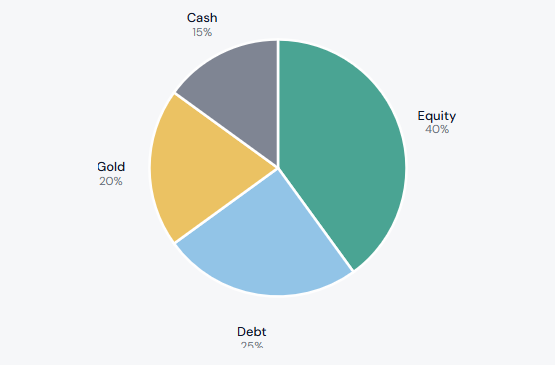
Equity (Stocks)
Higher potential for long-term growth, but prices can fluctuate significantly in the short term.
Debt
Generally offers more stability and predictability, with lower return potential compared to equity.
Gold
Often behaves differently from equity and debt and may help diversify risk, but returns can vary over time.
Cash / Liquid assets
Provide high safety and liquidity, but returns may not keep pace with inflation over long periods.
Each asset class carries a different balance of risk and return.
Risk Is Not the Same for Everyone
Risk is not just about market movements. It also depends on:
Time horizon
Financial Goals
Income Stability
Loss Tolerance
Emotional Comfort
An investment that feels risky to one person may be acceptable to another.
Managing Risk Through Diversification
Risk cannot be eliminated, but it can be managed.
Diversifying investments across different asset classes helps:
Reduce dependence on any single investment
Smoothen portfolio volatility
Improve consistency of outcomes over time
Asset allocation plays a key role in managing the risk–return balance.
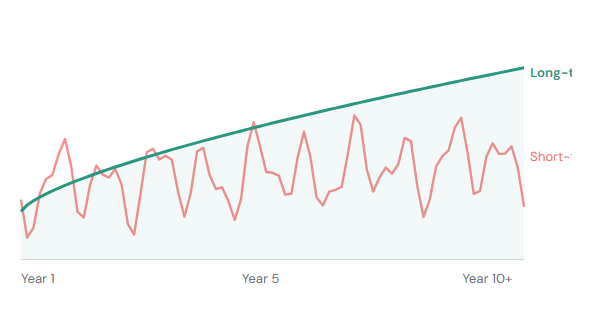
Long-Term Perspective Matters
Short-term market movements can be unpredictable. Over longer periods: • Volatility tends to even out • Disciplined investing often leads to more stable outcomes
Focusing on long-term goals rather than short-term fluctuations helps investors stay aligned with their strategy.
Avoid Chasing Returns
Decisions driven purely by recent high returns often increase risk. A sustainable investment approach focuses on:
Suitability
Risk alignment
Long-term objectives
Rather than short-term performance.
Important Note: This content is provided for educational purposes only and does not constitute investment advice. Individual risk tolerance and return expectations vary and should be evaluated in the context of personal circumstances.